This is the target range of cells that you want to average
The values in this range should be numerical, since we are computing a average on this range
However, if cells containing text are in this range, they will be treated as zeroes
AVERAGEIFS will only average cells in the average_range in which all criteria (defined in the remaining arguments) are met
criteria_range1
This range of cells should contain data that either match or do not match the criteria1 you define in the next argument
This range must contain the same number of cells as the average_range argument
If the average_range is a vertical (horizontal) range of cells, criteria_range1 must also be a vertical (horizontal) array of cells
This range can contain numerical values or text
This range can be the same as the average_range, if necessary
criteria1
This is the actual criteria that must be met (in the criteria_range1) in order to be included in the average
Carefully review the following screenshot, which provides a few examples of how you can write criteria and what they mean:
criteria_range2 [optional]
This is the next range which either matches or does not match criteria2 you define in the next argument
This range has the same properties as criteria_range1
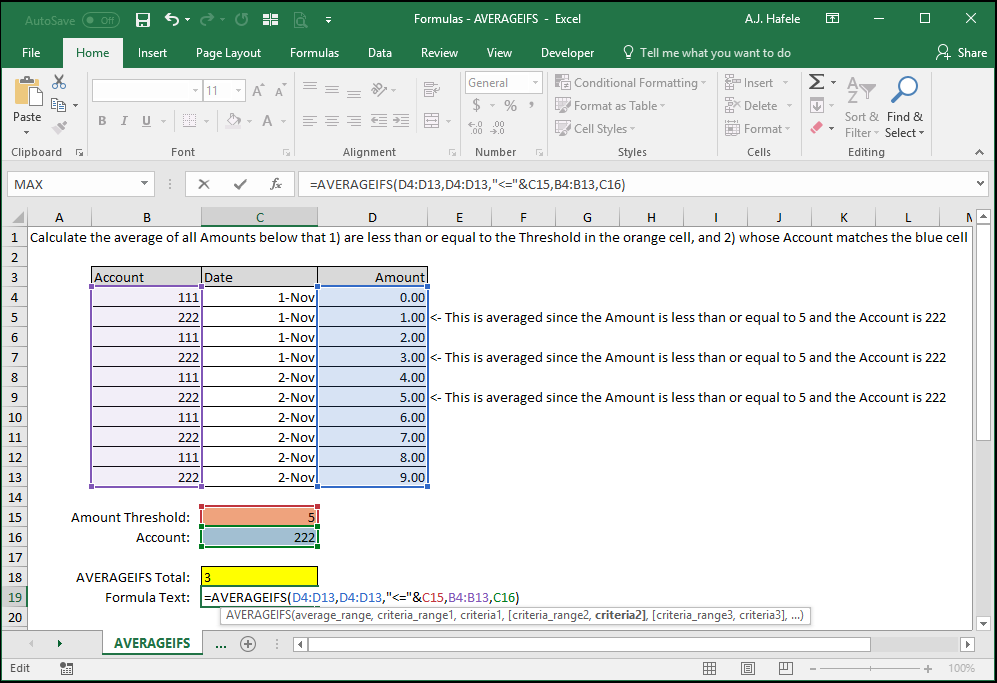
In the example above, since we want only to average a certain account (in the blue cell), criteria_range2 is the Accounts (B4:B13)
criteria2 [optional]
This is the actual criterion that must be met (in the criteria_range2) in order to be included in the average
This range has the same properties as criteria1
In the example above, since we only want to average those amounts whose Accounts equal the value in cell C16, criteria2 is simply equal to cell C16
The pattern continues up to 127 times
If you include any more criteria ranges (e.g. criteria_range3, you must also include a corresponding criteria (e.g. criteria3)
All future criteria_range arguments have the same properties as the criteria_range1 argument
All future criteria arguments have the same properties as the criteria1 argument
Tips
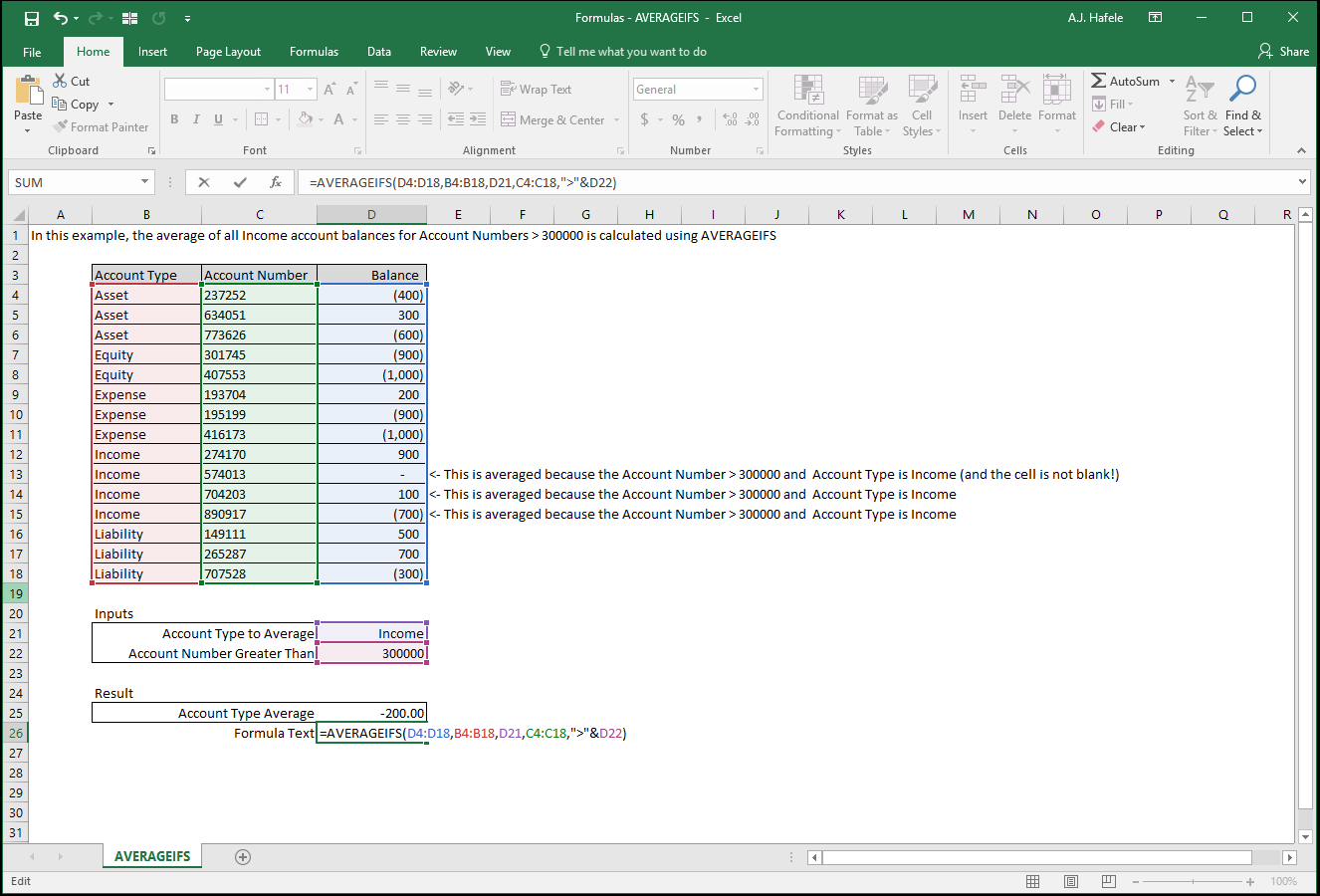
Be careful with blank values! The AVERAGEIFS function ignores blank values completely, but will not ignore zero values (as shown in the illustration above)
Again, this function works exactly like SUMIFS, except the data are averaged instead of added
The AVERAGEIF (not ending in "S") function can be used if you have just one criteria that needs to be met, but why use AVERAGEIF if you can always use AVERAGEIFS?
Note that the arguments in AVERAGEIF are arranged differently than those in AVERAGEIFS
As such, using AVERAGEIFS will allow you to easily add more criteria without having to change the arrangement of your arguments